Does cooking require a physical presence or is it possible to create and explore through digital platforms and experience food beyond the known limitations?
If you are not sure to understand the question, or to know what is this all about, or just looking for an answer, check the video below or go : http://collaborativecooking.net

Showing posts with label science. Show all posts
Showing posts with label science. Show all posts
Wednesday, 18 June 2014

Wednesday, 14 May 2014
Science Spark : reducing salt in Quiche...

Let's take a practical case : you are doing a quiche (ie a salted flan with ham) but you would like it to be more or less healthy, ie without too much salt. You do the first one, grind the ham, and bake it. For the second one, you are now in a hurry, take the same quantity of ham, but don't have time to grind it.
You serve the two to your guests. Surprise ! They like both of them equally, but, they find that the second one lacks salt... So, you now know how to increase the salt impression in your quiche without adding salt : well done !
This was recently proofed by Emorine et al, working at the Centre des Sciences du Goût et de l’Alimentation. Could industrial use this result to reduce salt in their convenience product? And what happens with sugar?
Emorine, M., Septier, C., Thomas-Danguin, T. and Salles, C. (2014), Ham Particle Size Influences Saltiness Perception in Flans. Journal of Food Science, 79: S693–S696. doi: 10.1111/1750-3841.12399
Wednesday, 7 May 2014
Science Spark : the end of Garlic Breath?

Have you ever hesitated before to eat a garlic containing food? Or have you ever been affraid of your breath after eating it? Well, the work of a team from the Ohio State University might help you ...
They investigate which food, consumed just after the garlic, could reduced the garlic breath. To do so, they measure the concentration of the responsible molecules (allyl methyl disulfide, diallyl disulfide, allyl mercaptan, and allyl methyl sulfide) in the breath of people after garlic consumption associated with some food, or in the headspace of a mix of garlic with those food.
"Successful treatments may be due to enzymatic, polyphenolic, or acid deodorization", like with spinach, green tea, apple or parsley, concludes the team.
Although they are not done with the research, when will an industrial offer a "garlic breath killing pill" ?
Ryan Munch and
Sheryl A. Barringer Deodorization of Garlic Breath Volatiles by Food and
Food Components Journal of Food Science 79
Article first published online: 4 MAR 2014 | DOI: 10.1111/1750-3841.12394
Wednesday, 30 April 2014
Science Spark : it tastes as good as it looks!
 Debra Zellner, from the Department of Psychology of the Montclair State University, recently teamed up with researchers from the Culinary Institute of Americato investigate the effect of plate presentation on liking.
To do so, they collaborate with a restaurant to serve a sautéed chicken breast with a fines herbes sauce, brown rice pilaf, and sautéed green beans with toasted almonds served on a round white plate. They served it two consecutive days, changing the presentation. They first ask patrons to rate the attractiveness of the plate, then the flavor of the dish.
And the one presentation which was rate as more attractive also resulted in an higher flavor appreciation!
Another proof that our sense of taste and smell can be easily tricked...
Debra A.
Zellner, Christopher R. Loss, Jonathan Zearfoss, Sergio Remolina, It tastes as
good as it looks! The effect of food presentation on liking for the flavor of
food, Appetite, Volume 77, 1 June 2014, Pages 31-35, ISSN 0195-6663,
http://dx.doi.org/10.1016/j.appet.2014.02.009
Tuesday, 11 March 2014
Science Spark : The Coke Effect
The Coke effect is a kind of scientific myth : no scientist even saw it, but everybody has heard about it and speak about it.
Thanks to two psychologists working in Berlin who recently published their work, the Coke effect is coming to live... In their experiment, they first made a drink by mixing 1/3 of Coke, 1/3 of Pepsi, 1/3 of River Cola (discount brand). They then invited consumers to taste this drink, letting them believe it was either Coke, or Pepsi, or River or an new one made in the lab. They then asked them rate the drink, and they as well recorded the brain activity thanks to MRI.
Results : not only participants significantly rated higher the drink when they were told it was Coke or Pepsi, but their brain was also more active in this case.
This is the Coke effect...
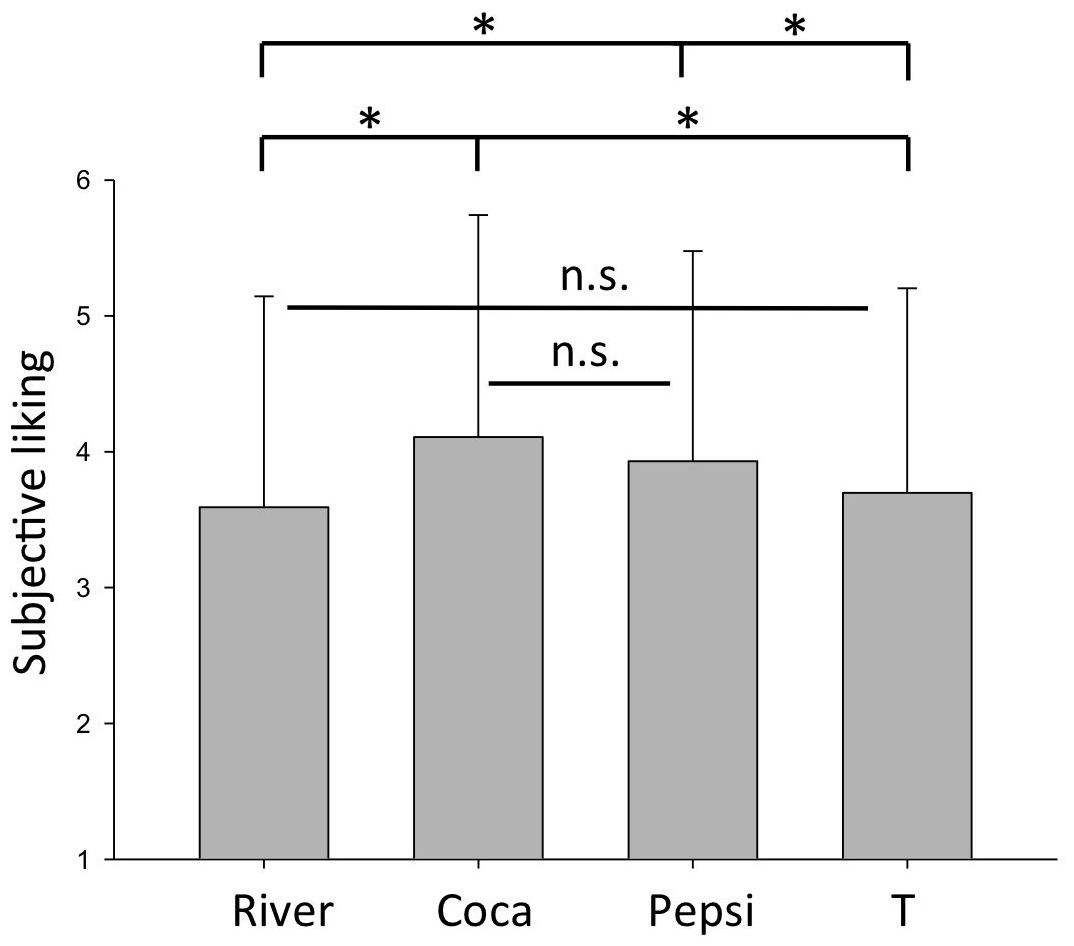
Does Taste Matter? How Anticipation of Cola Brands Influences Gustatory Processing in the Brain
DOI: 10.1371/journal.pone.0061569
Thanks to two psychologists working in Berlin who recently published their work, the Coke effect is coming to live... In their experiment, they first made a drink by mixing 1/3 of Coke, 1/3 of Pepsi, 1/3 of River Cola (discount brand). They then invited consumers to taste this drink, letting them believe it was either Coke, or Pepsi, or River or an new one made in the lab. They then asked them rate the drink, and they as well recorded the brain activity thanks to MRI.
Results : not only participants significantly rated higher the drink when they were told it was Coke or Pepsi, but their brain was also more active in this case.
This is the Coke effect...
Does Taste Matter? How Anticipation of Cola Brands Influences Gustatory Processing in the Brain
DOI: 10.1371/journal.pone.0061569
Friday, 7 March 2014
Science Spark : reducing salt content playing with expectation
 Salt reduction is a big challenge that all food producer are facing. Removing or reducing salt from a product is indeed easy, but making the consumers still liking it is another story...
Unilever regularly reveals scientific work on the topic, and in the last one, they " investigated if the
expectation, or implicit assumption, that saltiness remains constant
across mouthfuls, can indeed reduce the perception of variation in salt
concentration." In other words : "if a product looks the same, smells the same and has
the same texture as the product one is used to eat, small variations in
taste will go unnoticed".
And they indeed show it ! If you eat a product with a reduced salt content, you ll notice it immediatly. But, if the first bite of the product has the salt content you are used to, and the next ones a reduced salt content, but all other sensory attributes (ie smell, texture, taste) remaining the same, you won't notice it.
Of course, the next question is how to implement this result in a product...
Tuesday, 4 March 2014
Science Spark : Packaging design influences taste expectation

The second one, according to Prof Charles Spence and his team, working at the Department of Experimental Psychology, University of Oxford. In their recent study "Predictive packaging design: Tasting shapes, typefaces, names, and sounds", they wanted to assess how rounded vs. angular shapes, typefaces, and names, and high vs. low pitched sounds, can be combined in order to convey information about the taste (sweetness and sourness) of a product.
They highlighted the following:
- People tend to match tastes crossmodally to other sensory features.
- Rounded shapes, typefaces, and names, and low-pitched sounds enhance sweetness expectation.
- Angular shapes, typefaces, and names, and high-pitched sounds enhance sourness expectation.
- The different sensory features associated to a product’s packaging influence taste expectations.
Predictive packaging design: Tasting shapes, typefaces, names, and sounds, Velasco et al, Food Quality and Preferences, Volume 34, June 2014, Pages 88–95
Tuesday, 11 February 2014
Science Spark : Playing ‘Tetris’ reduces the strength, frequency and vividness of naturally occurring cravings
 Jessica Skorka-Brown, Jackie Andrade and Jon May from the Cognition Institute of Plymouth University have made a simple but striking experience... They invited participants to their lab, in craving conditions. They then asked them to quantify this craving, before to give them a task to do. Half of them played Tetris, when the second half seated in front of a computer, waiting for a program to load, but designed to never load.
After some times, participants were asked about their craving again. And guess what ? The one playing Tetris had significantly less craving than their colleague who waited the programm to load !
The research team then concludes that imagery is central to craving, and that a " visually based task should decrease craving and craving imagery". One could also asked if playing Tetris would then be a good diet?
Playing ‘Tetris’ reduces the strength, frequency and vividness of naturally occurring cravings, Skorka-Brown et al,Appetite, Available online 5 February 2014
Monday, 10 February 2014
The ghost food truck

 The artists Miriam Simun and Miriam Songster, working in Philadelphia, asked themself the following question : " how will people eat when global warming has changed our environment" ? They answered it via the Ghost food truck (http://steamworkphilly.com/ghostfood.html)... In this one of his kind food truck, they offered vegan substitute for potentially endangered foods: chocolate, cod, and peanut butter. As those substitute had neither taste or smell, participants received in addition a plastic headset delivering aroma to the nose...
Tuesday, 4 February 2014
Science Spark : Odour while waiting to be seated in restaurant will influence your choice
 Imagine that you are queuing at a buffet style restaurant for a
dessert. After standing for some minutes in the queue,
Imagine that you are queuing at a buffet style restaurant for a
dessert. After standing for some minutes in the queue,you finally reach the dessert part, and have too chosse between fruit or chocolate brownie. What will you choose? And why?
This is more or less the setup that Marie Gaillet-Torrent and her colleagues from the Centre des Sciences du Goût et de l’Alimentation in Dijon tested , adding an extra condition... One hundred and fifteen participants were invited to test a buffet lunch, where they had to choose between fruit compote and brownie for dessert. But, over those 150 people, 75 were "unobtrusively exposed to a pear odour", ie the piece was filled with pear aroma, but at such a low level that one could not detect it. And, at the end, those exposed to this pear odour more frequently went for the compote...
An application for this, suggested in this study, could be to use "non-attentively perceived odour" to promote healty choices in self restaurant. It would now be interesting to check the sustainibilty of such an effect for returning consumer, or what happends in a traditionnal restaurant setting.
Impact of a non-attentively perceived odour on subsequent food choices, Gaillet-Torrent et al, Appetite, In Press, Uncorrected Proof (at the time of writing).
Wednesday, 29 January 2014
Science Spark : The purpose of this study was to determine to role of flake shape on the packing characteristics of popped popcorn
Let's be honnest, who would not immediatly click on the link when he receives the new publication alert for "Effect of flake shape on packing characteristics of popped popcorn" ? And the first sentence of the abstract just confirms this need : "The purpose of this study was to determine to role of flake shape on the packing characteristics of popped popcorn"
 Sweley et al. simulated the filling of a movie theatre style packaging tub (14.0 cm bottom rim diameter, 17.0 cm upper rim diameter, and 15.4 cm tub height) with pop corn having different polymorphism (ie different shapes). Once they get a number, they checked by filling a real tub with real pop corn.
Results :
Sweley et al. simulated the filling of a movie theatre style packaging tub (14.0 cm bottom rim diameter, 17.0 cm upper rim diameter, and 15.4 cm tub height) with pop corn having different polymorphism (ie different shapes). Once they get a number, they checked by filling a real tub with real pop corn.Results :
- Number of flakes to fill a tub agreed well between experiments and simulations.
- You can fill maximum 28% of your pack with pop corn , ie you pay for 72% of air when you buy pop corn in movie theather (in the best case!)
- 36.9% bilateral +63.1% multilateral polymorphism minimized the number of flakes to fill the tub : ie if you see a pop corn machine making about 1/3 of long pop corn and 2/3 of big cluster, you better get away , you are about to get ripped of.
- Jess C. Sweley, Devin J. Rose, Xiaodong Jia, Richard A. Williams, David S. Jackson
- Effect of flake shape on packing characteristics of popped popcorn
- Journal of Food Engineering, Volume 127, April 2014, Pages 75–79
- http://dx.doi.org/10.1016/j.jfoodeng.2013.11.028
Sunday, 26 January 2014
Science Spark : should we add enzyme to release more aroma in a poor wine?
 If you one day try to make wine, you ll take grapes, let them ferment for some weeks, somehow filter and get something to drink. If you follow the molecules present in the grapes, you ll see that some of them will disappear during the fermentation, to give birth to aroma compounds. Those molecules, known as "aroma precursors", need some help to release the aroma: they get it from enzyme, which will cut the molecule in two, one of the moiety being the aroma.
Zhu et al, from Qinhuangdao University in China then got the following idea : what if some aroma precursors did not manage to release their aroma ? They would then be in our glass of wine ? Could we then release them? By adding enzyme?
So, they took Cabernet Sauvignonand and divided it in two. In one, they add β-glycosidase, in the other nothing. Using gas chromatography coupled with mass spectrometry, they were able to see the action of the β-glycosidase and the formation of aroma. Even more : they could confirm it by a tasting.
So, should we all have a small bag of β-glycosidase with us to pour it in a wine with a poor nose ? Could we then make it better?
Zhu, F.-M., Du, B. and Li, J. (2014), Aroma enhancement and enzymolysis regulation of grape wine using β-glycosidase. Food Science & Nutrition. doi: 10.1002/fsn3.84
Tuesday, 21 January 2014
Science Spark : Health Benefits of Wine: Don’t Expect Resveratrol Too Much
 | The resveratrol is a polyphenol found in wine, and is mainly known to be at origin of the French Paradox (ie improved cardiovascular outcomes despite a high-fat diet in French people, ie the reason why French people, although they eat good and drink wine are healthier). Many scientific studies have focused on the way resveratrol could act, or how terroir, fermentation or other wine making practice could influence its content in wine. |
However, a recent study published in Food Chemistry made an interesting test : Xiang et al have extracted several polyphenols from red wine to apply them on a cell and test their antioxidant activity. Results :
- There was no significant difference between the prime red wine and the red wine adding 10 fold resveratrol on neuroprotective effects on SH-SY5Y cell line.
- The contribution percentage of resveratrol to the antioxidant activity of red wine was less than other tested polyphenols.
- Limin Xiang, Lingyun Xiao, Yihai Wang, Haifeng Li, Zebo Huang, Xiangjiu He
- Health Benefits of Wine: Don’t Expect Resveratrol Too Much
- Food Chemistry, Available online 17 January 2014
- http://dx.doi.org/10.1016/j.foodchem.2014.01.006
To learn more about Resveratrol :
Significance of wine and resveratrol in cardiovascular disease: French paradox revisited., idavalur R, Otani H, Singal PK, Maulik N. Exp Clin Cardiol. 2006 Fall; 11(3):217-25;
Bianchini, F., and H. Vainio. "Wine and resveratrol: mechanisms of cancer prevention?." European journal of cancer prevention 12.5 (2003): 417-425.
Wednesday, 15 January 2014
Science Spark : What is the influence of gravity on potato deep frying ? (or: Should I make my french fries on the way to Mars or wait to be there)
 Theodoros Karapantsios is chemistry professor working in the Aristotle University of Thessaloniki on "Hydrodynamics and heat and mass transport in multiphase flows" and "Interfacial phenomena in foams, emulsions and liquid bridges."
Doesn't look yumi? Well, think about a piece of frozen potato (ie starch and water at 0°C) that you put in a bath of oil at 180°C, and you have an applied version of the work of Prof Karapantsios. Actually, Prof Karapantsios already made the link, and published several research results on this :
- On the capacity of a crust–core model to describe potato deep-fat frying
- Surface water evaporation and energy components analysis during potato deep fat frying
- Effect of potato deep-fat frying conditions on temperature dependence of olive oil and palm oil viscosity
In his last work, just published in Food Research International, he added the the parameter "gravity". So, he (and his colleague John Lioumbas, both collaborating with the European Space Agency) designed a device to deep-fry potatoes at increased
gravity levels (i.e. 1.8, 3.0, 6.0 and 9.0 · gearth).
Result : up to 3g, fries are better and done quicker. After, the crust is not attached to the core of the fries anymore...
This research is not only relevant for astronaut wanting to eat french fries. It can be a way to make deep-fryer that work better, but it is a great insight on the convection and mass diffusion process, which bring new knowledge in "Hydrodynamics and heat and mass transport in multiphase flows" and
"Interfacial phenomena in foams, emulsions and liquid bridges."
John S. Lioumbas, Thodoris D. Karapantsios
Effect of increased gravitational acceleration in potato deep-fat frying
Food Research International, Volume 55, January 2014, Pages 110–118http://dx.doi.org/10.1016/j.foodres.2013.10.044
Monday, 13 January 2014
Science Spark : Preparing food increases liking and consumption
 It is certainly a very intuitive result, but it is now proven : the food that you make yourself test always better (which is known as the Ikea effect). Simone Dohle, Sina Rall and Michael Siegrist from the ETH Zurich confirmed this in a study published this week in Food Quality and Preferences. Interestingly, they also showed that preparing food could facilitate overconsumption, ie people are less sensitive to calories...
Concretely, this clearly shows the need for food producers to engage consumers in the product preparation.
More information :
- Simone Dohle, Sina Rall, Michael Siegrist
- I cooked it myself: Preparing food increases liking and consumption
- Food Quality and Preference, Volume 33, April 2014, Pages 14–16
- http://dx.doi.org/10.1016/j.foodqual.2013.11.001
Tuesday, 7 January 2014
Electronic taste or taste of electronic ?


One could imagine to use this for the perfect sensory panel calibration item, but Nimesha goes further and already imagine a voice over IP system ... Could we give taste to tasteless diet product? Could we taste product before to buy them on internet?
It is anyway worth visiting his website : http://www.nimesha.info/
Subscribe to:
Posts (Atom)